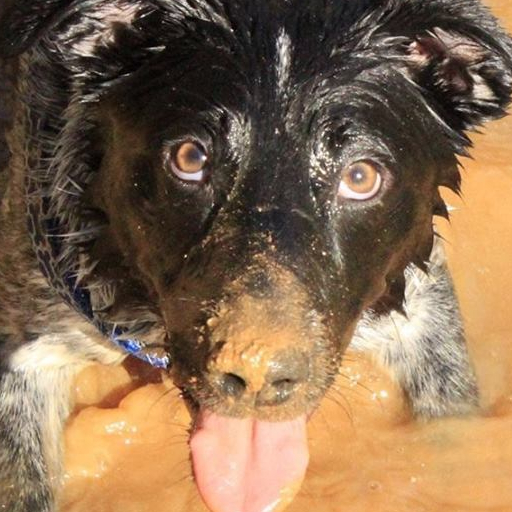

Everyone has dealt with feeling frustrated during a training session. We want our dogs to be perfect because we see perfect videos of perfect dogs made by perfect trainers all over the Internet, right?
What these videos don’t show you is the process that the trainers went through. Even my own videos show a finished project, or show the most successful clips of a trick or behavior that’s still in progress and not quite complete. I have very few videos that show how I deal with “failures” in training.
As a trainer, I’m here to tell you: You’re going to experience failure and frustration. You’re going to run into situations where your dog isn’t as prepared as you thought he was. You’re going to feel like a failure.
And that’s okay!
Remember: Your dog is not a robot. Your dog is a living, breathing, thinking, feeling creature who has good days and bad days.
Just like you.
Are you perfect in every situation? Do you remember every single piece of information you’ve ever learned? If you can’t be 100% reliable every single second of every single day, why do you expect that same perfection and reliability from your dog?
Let me be clear, I’m not suggesting we just let dogs run amok, humping and peeing and biting everywhere. Of course we need to teach boundaries – my entire blog is all about training dogs and teaching them boundaries. I’m not saying training your dog is bad.
What I am saying, is that it’s okay to have a bad day. It’s okay to stop training and say, “Okay, Fido, today isn’t a good day. Let’s have fun instead.” Play with your dog. Enjoy your dog. Love your dog. Even if he isn’t “perfect.” Even if he still sometimes pees in the house, or tries to hump your neighbor’s dog, or just doesn’t seem to grasp the concept of no jumping on guests.
Basically, you should expect to feel a little frustrated from time to time. Training sessions will go awry. So here’s what you can do when you’re feeling frustrated:
STEP ONE: END THE SESSION
When we’re frustrated, we’re often demonstrating body language cues we don’t even realize. We huff and sigh, purse our lips, frown, glare, clench our teeth, use quick movements, have an edge to our tone, and sometimes, we yell. Dogs read all of this, and honestly, it makes them want to avoid us. When you’re feeling frustrated, look at your dog. Is she looking away from you? Panting heavily, yawning, licking her lips? These are all signals that your dog is feeling too stressed and needs a break. These can also be signals that say, “I don’t know why you’re so upset, but it’s making me nervous.”
You can end a session a couple of ways. If your dog knows the “Find It” game, use that. Once your dog has found all the treats, say, “All done!” in a cheerful voice.
You can also say “All done!” and toss treats onto the ground.
Or, you can start playing for a short time, then say “All done!” and walk away or put toys and treats up.
All of these end the session in a positive way, and can also help you relax a little since there aren’t any expectations. Once you relax, it’s easier for your dog to relax. You can come back to the training session after you’ve both relaxed for a while.
STEP TWO: EVALUATE
What went wrong? Try to determine when exactly your dog started feeling stressed. When did your dog stop listening to you? When did you feel the most stressed? In nearly every case I’ve witnessed, the dog “stops listening” because he’s confused and doesn’t understand what’s being asked. Even when an owner says, “He knows what to do,” their dog is actually telling me, “I have no idea what I’m supposed to do.” Dogs are very honest, and will tell us what they’re thinking and how they feel. We just have to know how to listen to them.
I’m not at all saying that the owners who think their dog “knows” what to do are lying. But they are misunderstanding their dog, and often, haven’t really taught for situations that they claim their dog “knows.” This is common, and says nothing about the owner at all. We’re humans, not dogs, so of course we don’t understand canine body language. I don’t expect owners to understand immediately what their dog is saying. That would be about as unreasonable as them expecting their dog to understand immediately what they want without completely training for it.
Film your training sessions with your dog!
The best way to understand “what went wrong” in a training session is to film it. Pull out your camera or your phone, and just film a session. Pretend the camera isn’t there. You aren’t going to post this anywhere; this is for your eyes only(or the eyes of your trainer) so you can see when your dog starts becoming confused. This way, you can plan your next training session accordingly, and allow it to be more successful!
STEP THREE: TRY AGAIN
Once you know what you and your dog need to work on, the final step is super easy. Just try again! Remember your previous lessons, remember what you have actually trained your dog for, and try to not have super high expectations if you haven’t worked on that.
Let me break it down: If you’ve only ever taught your dog to sit inside or in the backyard, don’t expect your dog to know how to sit when you’re out on a walk and an exuberant puppy comes up to say hi. If you haven’t worked on distractions, this is a major distraction for most dogs. “Sit” just isn’t going to happen in this situation until you’ve trained it to this level.
STEP FOUR: LOWER EXPECTATIONS
This does tie in to Step Three, but I’m going to make it its own step anyway. If you’re repeatedly dealing with “failed” training sessions, and repeatedly feeling frustrated, try lowering your expectations. If you’re trying to bring your dog outside in the backyard to focus on teaching eye contact, try inside with the back door open. If you’re trying to teach your dog to sit on walks, start with teaching him to sit while you’re walking up and down your driveway first.
Frustration and failure is completely normal. Humans and dogs speak a completely different language, so naturally, there are going to be times when we butt heads or misunderstand each other. That’s okay! Perfection isn’t the most important part of training. Having fun is. And the great thing about keeping training fun, is that it makes dogs want to listen! So by having fun, you actually can reach the near-perfection you see from trainers! Pretty awesome, right?
So remember, keep your spirits high, end a session if you’re feeling frustrated, keep expectations reasonable, and always have fun!
And remember, if you ever need help, contact me! I am here to help you!
Photo credit: amenclinics
Follow the Guidebook for more tips!
Latest from the Guidebook

A Beginner’s Guide to Off-Leash Reliability: Building Trust, Focus, and Freedom
Want to hike and explore with your dog off leash? Learn how to build reliable off-leash behavior using attention, leave it, and recall!

How to Train Your Dog for Camping: Tips for Calm, Reliable Adventure Dogs
Train your dog for camping adventures! Learn check-ins, “leave it,” settle, and leash skills for calm, reliable off-leash behavior outdoors.
Hyper to Hiking Buddy: How to Channel Your Dog’s Energy for Adventure
Got a high-energy dog? Learn how to turn your wild, overexcited pup into a calm, focused trail partner. Espresso Dog Training shows you how to go from chaos to connection using positive reinforcement.


 Espresso Dog Training
Leave a reply to Dog Care Essex Cancel reply