Does your puppy or older dog like to walk on places where you’d really rather he didn’t?
That’s right, faithful followers. Today we are discussing Boundary Training!
*Gasp!* Does that mean you’re going to suggest an ecollar or prong collar? But aren’t you a positive reinforcement trainer?
No!
I mean, no, I’m not going to suggest an ecollar or prong collar. Yes, I would be labeled as a “Positive Reinforcement” trainer.
Anyways! Boundary training. Most dogs need it, few people know how to teach it.
What is boundary training, you ask? Boundary Training is teaching a dog where his or her boundaries are. In other words, where it’s okay to put paws, and where it isn’t okay to put paws unless given the okay.
Honestly, I have found Boundary Training to be fairly simple, as long as you work at the dog’s level, always work so your dog is successful, and only increase your criteria when your dog is ready. Keep increasing criteria at your dog’s pace, and soon, your dog will be able to be outside with no leash because, wow! He knows exactly where he should be!
Just a note: I don’t recommend anyone let their dog just wander around outside without a leash 24/7, and absolutely never without supervision or a fence. It just isn’t worth the risk. Whether you have an invisible fence or not, dogs have been known to ignore the stim from invisible fences. For some dogs, there is practically nothing you can do that is punishing enough for them to ignore something they really, really want. Boundary Training only teaches your dog how to behave when you’re around. But again, *NO* dog should ever be outside off leash without supervision or contained in a physical fence.
Alright, with that disclaimer out of the way…
How do I train Boundary Training?
STEP ONE: BUILD THE FOUNDATION
In simple terms, this means define where you *don’t* want your dog, and where you *do* want your dog. As always, I suggest rewarding your dog every second that they are in the appropriate place. You will fade the rewards in time, but to begin, you want a super solid history of rewards in the appropriate place.
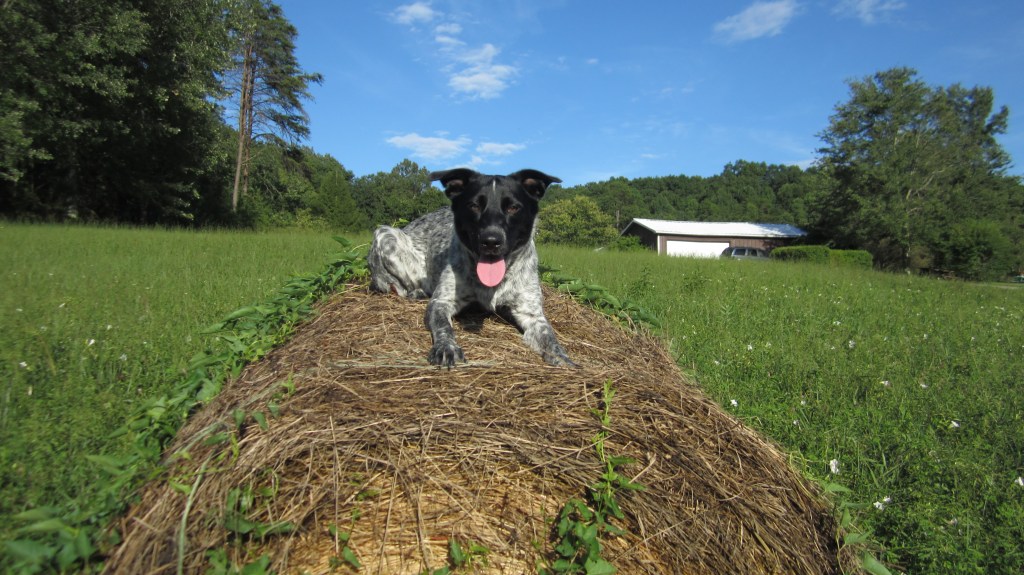
For starters, if it’s possible, I prefer to begin without a leash. *HOWEVER* if we are working outside, or in an area without a fence, a leash is imperative. So, let’s say you are trying to teach you dog not to run into the road. To begin, place a leash on your dog. Walk him to the edge of the road. Mark (see other blog posts for more information on what a “marker” is) and reward with something super high value. For my Cattle Dog mix, that is the opportunity to “chase” a piece of food, catch it in mid-air, or find it in the grass. If your dog prefers toys, use that. Water bottles? Use it! Bubbles? Use it! Use whatever your dog will figuratively do back flips for. Walk near the boundary, but not yet stepping over it, rewarding your dog for each step. Repeat this 10-20 times, depending on your individual dog.
You are building the foundation of staying within the boundaries you’ve set. It is important to practice other types of training in other areas within the boundaries. This helps your dog understand that they don’t necessarily need to be right at the edge. However, at the edge is where I begin to teach the dog where his/her boundaries are – in other words, where “their” territory ends.
STEP TWO: INCREASE THE DIFFICULTY
Take a step onto the road and mark and reward *before* your dog has the opportunity to step onto the road. This means you will likely be marking the second your feet hit the road. Reward so that your dog remains in the grassy/acceptable area, and doesn’t cross over onto the unacceptable area.
Walk on the road so that the dog is still next to you, but walking on the acceptable area. Mark and reward every step, then every few steps. Again, you want there to be a really solid foundation of walking on the acceptable area.
Increase the difficultly slowly by moving further and further away from your dog. If at any point your dog does cross over onto the unacceptable area, simply lure her back to the acceptable area. I like to reward the first few times using the awesome reward, and then I will simply use a verbal reward or a lower-value reward than the one you’re using while she remains walking on the acceptable area. This way, returning to the acceptable area is still rewarding, but you don’t risk creating a behavior chain of:
Step onto road –> Step off road –> Get reward.
Behavior chains such as that are easy to create on accident, so just be aware of this. This is why we begin with the foundation of walking next to the road, without adding the chance of the dog walking onto the road and being redirected off the road, and then rewarded.
As your dog becomes more and more successful, you can start dropping the leash, or switch to a long line.
Note: If your dog does not have a reliable recall/come when called, use a long line. You do not want your dog to suddenly run off and not be able to call her back. In the meantime, work on recalls, check-ins, and increase your dog’s reliability off the leash. Boundary Training will not get very far if your dog is unreliable off leash.
STEP THREE: ADD EXCITEMENT
Continue rewarding every few steps. As your dog continues to succeed, you can start adding more excitement. With each new level of excitement, you may need to lower criteria. For example, jog in place and reward for one second of your dog remaining on the acceptable area. Gradually increase to five seconds, ten seconds, twenty, and so on. If your dog crosses onto the unacceptable area three times, this means you have moved too far, too fast, and should back up to the previous step.
Here, I am working with a Doodle puppy. The owners wanted this puppy to remain off the courts while they play tennis:
Notice that I am just moving a few steps before I mark and reward, but I am still gradually increasing criteria and increasing excitement.
In the second video, I am just touching the net to add a bit more excitement. I am also moving further away from this puppy. I worked on distance before excitement, which is very important!
As you continue to increase distance and excitement, and your dog continues to succeed, start throwing balls, toys, frisbees, etc. Remember, if your dog crosses the boundary three times, this means you are expecting too much, too fast, and need to back up a step or half a step.
Boundary Training does not have to be difficult or impossible. It can be incredibly simple! The important part is to make sure you begin with the foundation.
If you need help with Boundary Training, make sure you contact us!
 Espresso Dog Training
Leave a comment