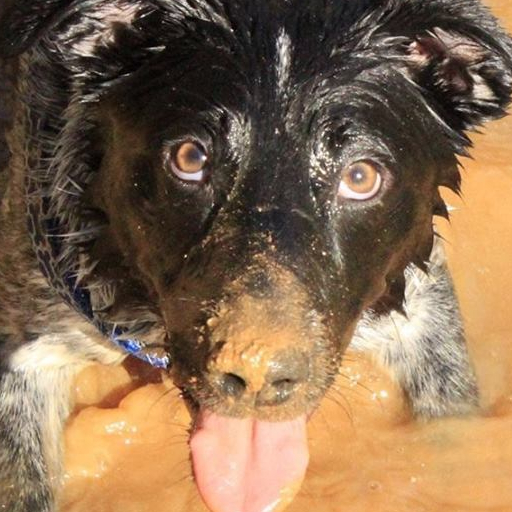


Chasing is a behavior that many, many dog owners struggle with. Chasing cats, chasing cars, chasing prey, chasing children… The list goes on and on.
The first thing to understand is, dogs are not intentionally trying to disobey you. They aren’t being “cruel.” They aren’t being “bad dogs.” In fact, a dog who chases is being true to his species. Dogs chase. They are attracted to movement. Chasing is another behavior that is completely normal. It is an undesirable trait to us humans, but it is completely normal for dogs.
There are several reasons why your dog may be chasing prey, livestock, or cars. Understanding the why is important. If your dog is intent to kill, the chances of successfully teaching him to be polite, calm, and not the predator he is when you aren’t around are very low. This doesn’t mean you shouldn’t love your dog, and it doesn’t mean your dog is bad. It simply means your dog is a dog, and is only following his instincts.
Chasing cars can be another thing entirely. Dogs who chase cars usually aren’t looking to kill anything. These dogs also tend to be very movement-sensitive dogs such as Border Collies and other herding breeds. The plus side is, this is absolutely a behavior that can be worked with. Dogs who chase running children tend to fall into this category as well. They aren’t looking to kill or maim. These dogs tend to have little impulse control, and lots of pent-up energy! This type of chasing is incredibly easy to work with.
Before I get into how I work with chasing, I want to make it very clear that this is for dogs who likely will not kill the thing they catch. I did use these methods with my previous Akita/Husky mix before I became a trainer, who did chase to catch and kill, but he had several health issues and was older by the time I started working with him. I also spent a lot of time on working with him. Even still, I never trusted him alone with a cat.
Now, I own an Australian Cattle Dog mix, and have worked tirelessly with her, as well. She is much younger, has much more energy, and definitely a lot more drive than he did. Impulse control and an outlet for that chasing is imperative to helping your dog to stop chasing. I usually try to keep my posts light, and I will continue to do so, but chasing can be a very serious behavioral issue. It is not easily “cured.” In fact, I would say it isn’t “curable” – but you can teach your dog what you want him to chase instead.
IF YOU ARE NOT SURE IF YOUR DOG IS CHASING TO KILL, PLEASE CONSULT A PROFESSIONAL TRAINER!
I cannot stress this enough. Do not attempt to do this on your own if you think your dog will kill an animal. It is not worth it. I will provide links at the end of this post that will help you find a trainer. Again, if you suspect your dog will kill, do not attempt this on your own!
Okay, now to the fun!
As I mentioned, most dogs who chase simply have little impulse control. What is impulse control? It is the ability to stop and think before acting on your impulses. Before you expect this from your dog, consider your own life. How difficult is it for you to control your impulses? If you’re anything like me, the answer is probably very difficult!
The good news is, it’s a heck of a lot easier to teach your dog to control their impulses than it is to teach ourselves how to control ours!
There are many, many ways to teach your dog impulse control, but one way I like to start with is a method I actually learned from Emily Larlham. Her channel on YouTube is Kikopup, and I strongly suggest looking up her “settle” and “leave it” videos! She is spectacular!
I don’t want to delve too deeply into it, otherwise this will just turn into a big wall of text, but teaching a “settle” essentially goes like this:
Wait for your dog to sit. Don’t prompt. Don’t speak. Don’t even make it feel like a “training session.” Just wait for your dog to sit. Very calmly, very quietly, place a treat on the floor, in between your dog’s front paws. Do this several times as long as your dog remains sitting, then, after about 5-10 treats, you’re going to up your criteria(or expectations), and wait for your dog to lie down.
Just as before, quietly, calmly place a treat between your dog’s front paws. Repeat as long as your dog remains lying down.
Your dog is probably looking at you now. Wait for him to put his head down. Again, put a treat on the floor. Again, you are going to repeat this several times.
Now wait. Did your dog pop his head up? This means he is waiting for the treat, and is behaving this way only for the treat. Now comes the tricky part. You’re going to wait until your dog basically gives up. No matter how long it takes, wait until your dog appears completely relaxed. This is generally shown when a dog rolls onto his hip. For my Cattle Dog, it began with a sigh!
As your dog becomes more relaxed during these exercises, you’re going to start moving. Just a little bit at first! Shift your legs. Sniffle. Roll your shoulders. Move your arms. Reach down to pet him. If your dog remains relaxed and doesn’t pop his head up, place that treat down there! He is learning to relax! Yay, Fido! (But don’t actually throw a party; this is meant to be calm, not exciting!)
You’re going to keep making it difficult for your dog, but in small steps! Don’t fret; most dogs catch on very quickly!
Now, before I move on, I want to say that it is important to remember that your dog still needs an outlet for his energy! Play with him! Show him how to release that energy in appropriate ways! Tug is one of the best ways, but there are rules to tug. That, however, is another blog post. The important thing is to help your dog release his energy in a way that you find appropriate. Training is a fabulous way to tire a dog out mentally! In fact, many trainers, myself included, feel that a walk around the block does very little to actually tire a dog out. Teach him to sit. Teach him to sit in the backyard. Teach him to sit in the front yard. Teach him to sit before you put his leash on. Teach him to sit before you open the door. Teach him to touch your hand with his nose. Teach him to push a ball with his nose. Wear out his doggy brain! For some of my clients, simple training combined with “settle” has eliminated chasing. It is that awesome!
Another method I use – combined with all of the above – is an automatic leave it. When doing this, I do not let the dog have what I am expecting him to leave alone, so start with something your dog has very little interest in, that is very different from the treat(or toy!) you’re using to reward him with. You want something small that you can hold in your fist.
Hold the Leave It item in your fist. Your dog may sniff your hand, and may try to get the item out of your hand. Let him try. If he is hurting you, simply pull your hand back calmly. As soon as your dog pulls his head back, reward him! I use a marker for this exercise to let the dog know the instant he did something that will earn him his reward.
A marker is simply a noise or one-syllable word (or physical touch, or scent, or light if your dog is blind and/or deaf) that tells the dog “That behavior right there has earned you a reward!” I prefer clickers, as they emit a novel sound that the dog has likely never heard before. If your dog is sensitive to sounds, you can use the clicking of a pen, you can click your tongue, you can snap, you can clap, you can say “Yes,” you can even say “Fish!” It does not really matter how you mark, but marking the behavior is, in my opinion, the fastest way to teach your dog what you want! (We do not mark while teaching “settle” because a marker is, typically, very exciting, and we do not want a dog to be excited during settle.)
I don’t want to delve too deeply in the Automatic Leave It game, either. I feel like this post is already becoming very lengthy, and I fear I may lose you guys in all the babble. So, here’s a video by Emily Larlham(Kikopup) that explains, for the most part, what I do for Automatic Leave Its. I urge you to watch this, because it is an important step to the way I teach dogs to stop chasing.
I also add other items, not just dropped food, so keep that in mind! Watch her whole leave it series; she explains very well how to turn it into a default or automatic response to nearly everything in life that your dog will struggle with leaving/ignoring.
OKAY! Now to the real issue!
Leash your dog for all of the following exercises! You do not want an accident to occur! You also do not want your dog to practice the behavior of chasing.
To begin, make sure your dog cannot get to whatever it is he’s chasing. I suggest leashing, but in the following video I have a physical barrier between the dog I am training, Lobo, and a duckling(later, ducklings) that he would like to eat.
I like to start where the dog cannot see the animal he wants to chase. He may be able to smell and hear it, but I do not want him to be able to see the animal. Because chasing tends to be triggered by movement, removing the sight of the animal, and only allowing the dog to hear the animal, will help desensitize him to the sounds and smells, and will help him learn to relax around the sounds(with the training I am about to describe).
We start with the leave it like training. Dog looks away, “Yes!” or click, and reward with a high value treat. I use real meat. Something like pepperoni, chicken, beef, steak. You may also be able to use cheese. For my Akita/Husky mix, I used green beans because of his weight. However, he had a very strong positive association with clicker training, and enjoyed working for the click. If food doesn’t get your dog’s interest, toys will work, but we aren’t looking for the dog to be excited. We want him to be calm. Food is preferable, but if you *have* to start with a toy, try to keep it low-key, and fade to food as soon as possible. You can feed a food treat and then toss a toy in the opposite direction to begin associating food with something great.
Watch this video of me with my Akita/Husky mix. Notice that I am marking for just the tiniest movement away. This is where you will want to begin when your dog is ready. *Work on the above skills FIRST! They will lay the foundation for this training!*
Note: In this video, I started wayyyy too early! I also should have placed a physical barrier between the dog and the duckling. I believe I did place a physical barrier after this video. With client’s dogs, there is always something preventing the dog from reaching the thing he wants.
Work at your dog’s pace! If he is not ready for something, do not push it! If your dog is struggling to leave an animal alone, back up – you’re likely going too fast for your dog. Start at a further distance. Take further measures to ensure your dog cannot see the animal he is wanting to chase. Take steps to ensure your dog is able to focus on you. Some dogs may also need to be taught eye contact, so if you notice that your dog is really struggling with keeping his eyes on you, it may be wise to back up, remove the animal, and work on eye contact first. Then eye contact with very low distractions. Then eye contact with gradually more and more difficult distractions. Again, work at your dog’s pace.
Very gradually, as your dog succeeds, you will make it more difficult. If you are working at a distance, take gradual steps closer. If you have a physical barrier, remove the barrier but keep a leash on your dog. If it is safe to do so, you may also use yourself as a physical barrier, and gradually move to the side, so you aren’t in front of your dog, as he succeeds.
If at any point your dog struggles, simply back up a step, or even half a step(figuratively and/or literally!). Whatever helps your dog succeed.
Eventually, you are going to be looking for sitting, lying down, and relaxed positions!
Take very small, gradual steps! When you remove the barrier or move closer to the animal, you will lower criteria. So instead of expecting your dog to sit, you will only expect your dog to look away/look at you.
In this video, the duckling is on the bed next to me. She ends up getting quite close, and you’ll notice Lobo struggles for a second before he makes the right decision!
I want to say again – I worked HARD with this dog! I believe I spent a total of five to six months working on this. With clients now, we don’t spend as much time, but if you are doing this yourself, expect to spend a very long time! Teaching a dog not to chase isn’t easy. But it is absolutely possible!
This video had quite a few things wrong with it, but I want to point out that, though Lobo almost immediately lies down, I am still keeping his leash on him! This is extremely important! Until you are 100% confident that your dog will 100% of the time NOT chase that animal, he should be on leash, or the animal should be kept somewhere protected.
Here is a video of me working on impulse control with our cat and dog. Ember previously chased cats. Notice that she is almost completely keeping her eyes on me! She is a very awesome dog!
Okay, last video, I promise! This final video is “staged” in the sense that Lobo did know I had food. But this was honestly the only way I could actually get him around the ducks. Once he realized that it was more rewarding to ignore them, that’s pretty much all he did, haha!
Best of luck! Have fun training your dog! This is really a great skill to teach to puppies, before they ever even start chasing!
Remember, if you are struggling, contact a trainer!
Certification Council for Professional Dog Trainers
International Association of Canine Professionals
National Association of Dog Obedience Instructors
 Espresso Dog Training
Leave a comment